Remote Control for RokuTV
- 4.2
- Rating
- 5.00M
- Installs
- Free
- Price
 Analysis by App-foxy
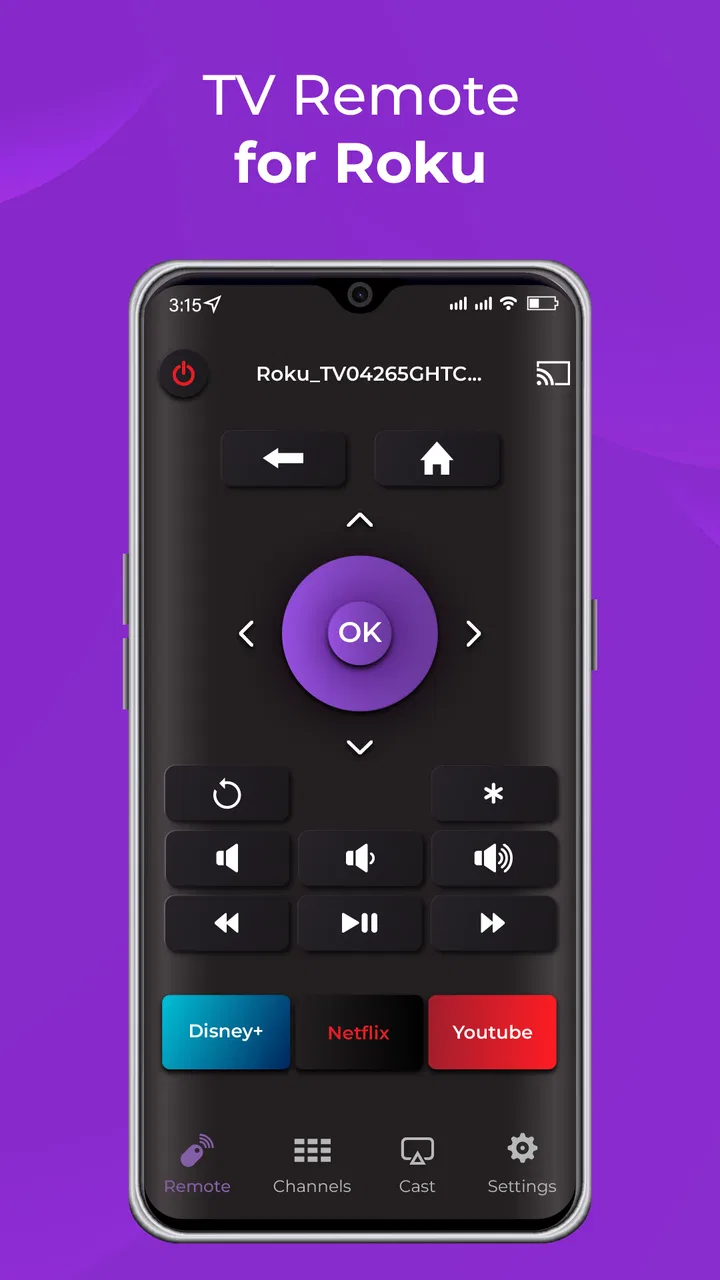
I tried Remote Control for RokuTV as the sort of utility you install when the physical remote has disappeared into the sofa, lost its batteries, or simply feels less convenient than the phone already in your hand. The first impression is straightforward: this is a free Tools app from EVOLLY.APP designed to turn an Android phone into a controller for a Roku TV. It is aimed at a very ordinary problem, and that is part of its appeal. You do not need another entertainment service or a complicated smart-home dashboard; you need a practical way to operate the television.
After the novelty of controlling the screen from a phone wears off, the more important question is whether the app deserves a permanent place on your device. My answer is qualified but positive. It can become a useful backup remote and, for some households, a regular controller. However, its value depends heavily on how often you use your Roku TV, how reliable your home network is, and whether you prefer the speed of a dedicated physical remote over the flexibility of a touchscreen.
From a clever backup to a daily Roku TV habit
I’d frame this section around the shift from emergency backup to something you reach for by habit. A useful way to test that change is to notice which moments genuinely favor a phone—such as controlling the TV while your hands are occupied—and which still feel quicker with buttons. That distinction sets up a closer look at how the app’s current release fits into an established Roku TV routine.
You May Also Like

 Blood Strike: 2.5 Anniversary
Blood Strike’s Loadouts Turn Every Drop Into a Tactical Gamble
A close look at Blood Strike’s custom loadouts: how fast access to signature weapons reshapes its battle royale rhythm, rewards preparation, and narrows the gap between fights.

 Pandora - Music & Podcasts
Pandora’s Music Is Easy to Start, but Harder to Recover
Pandora’s strength is its low-effort path from a seed to a station. Its weak spot is how much confidence it asks you to place in connection, setup, and quiet recovery.

 8 Ball Pool
 Is Built on Rivalries, Rematches, and Routine
A close look at the rivalries, rematches, shared routines, and unanswered safety questions that turn a quick pool match into a persistent mobile community.

 Samsung Music
’s Quiet Strength Is Playing What You Already Own
Its reach comes less from spectacle than from dependable access to a personal library. That simplicity is both the app’s strongest retention engine and its ceiling.

 AccuWeather: Weather Radar
AccuWeather Review: A Quick, Clear Forecast for Everyday Decisions
For everyday plans, the best forecast is the one you can understand quickly. AccuWeather makes rain timing, radar, and local conditions easy to act on, with a few trade-offs.

 Hill Climb Racing
Why Hill Climb Racing Still Turns Crashes Into One More Run
A tiny car, a bumpy hill and one more upgrade: Hill Climb Racing keeps resurfacing because its simple chaos makes every near-miss feel personal.
More From Our News Desk



Why the first week feels useful
The strongest part of the first-week experience is convenience. A phone is usually nearby, so the app removes the small hunt for a remote control. That matters most during familiar situations: starting a show after sitting down, pausing something while cooking, lowering the volume when another person is sleeping, or navigating a menu when the original controller is not in the room.
I also like the idea of having a backup available before a remote problem becomes urgent. When a physical controller is missing, a phone-based alternative can save a frustrating search. This is especially helpful in homes where several people move remotes between rooms. The app gives the television another control path without requiring a separate replacement remote immediately.
The basic concept is easy to understand because it matches the device it controls. You are not learning an unfamiliar media system; you are using a phone to handle Roku TV commands. That makes the app approachable for someone who is comfortable with a smartphone but not interested in configuring a more elaborate smart-home product.
Its store summary describes smooth control of a Roku TV from a phone, and that is the right way to think about it: a focused remote utility rather than a broad entertainment platform. The short description is simply “Remote Control,” which also reflects the app’s narrow purpose. I would not install it expecting recommendations, streaming access, or a replacement for every television setting. Its job is control.
A realistic evening test
Imagine arriving home with the physical remote left in another room. You open the app, use the phone as the controller, select a program, and keep the device nearby for playback adjustments. Later, you pause the show to answer a message, then resume without reaching for another object. That workflow is where the app makes sense: the phone is already part of the moment, and the remote function becomes an extra tool rather than another item to carry.
There is a useful trade-off here. A phone offers a flexible screen and can be easier to locate than a small remote, but it also introduces distractions. A notification, a low battery, or the need to unlock the device can interrupt what should be an instant action. A physical remote is often faster for repeated commands because your fingers can find buttons without looking. Remote Control for RokuTV is therefore most appealing when convenience and availability matter more than tactile speed.
Who benefits immediately
I think the app is a good fit for people who regularly misplace the original controller, share a Roku TV with several family members, or want a dependable fallback while traveling between rooms. It can also suit users who prefer keeping fewer accessories on the coffee table. If everyone in the home carries a phone, the television is less dependent on one small remote that can vanish at the worst time.
It is less convincing for someone who already has a reliable physical remote and dislikes using a phone during television time. If you want to control the screen from across a room without waking or handling your phone, the traditional option remains better. The app does not eliminate that preference; it simply offers another route.
What to check before relying on it
The most important practical point is connection. A phone remote generally needs the phone and television to be able to communicate through the same home setup. If the app cannot see the Roku TV, I would first check that both devices are connected to the expected network, then close and reopen the app, and finally confirm that the television is awake and ready to receive commands. These are simple steps, but they are worth remembering before assuming the app itself is broken.
I would also test the connection before putting the physical remote away. A backup is only useful if it works when needed. Open the app, confirm that the television appears, try navigation and playback, and then leave the original remote somewhere sensible. This small habit prevents the common mistake of discovering a connection issue only after the physical controller has gone missing.
The first-week limitations
Phone control is not automatically better control. Touch buttons can feel less precise than physical ones, especially when you are navigating quickly. The phone may lock, switch to another task, or run low on battery. If several people want to use the television, they may also need to install the app or pass one phone around, which can be less convenient than sharing a single remote.
There is also the question of attention. Using a phone to operate a television places two screens in the same activity. That is useful when you want quick access, but it can encourage checking messages or browsing instead of watching. For me, this is the main first-week trade-off: the app solves the missing-remote problem while creating a small amount of phone dependence.
What remains useful after the novelty fades
Remote apps often feel impressive for a few minutes because controlling a television from a phone is a neat trick. The lasting value is different. It comes from repeated, low-effort situations where the app is genuinely more available than the physical remote. If you use a Roku TV every day, the utility can become part of your routine, particularly as a backup kept ready on a frequently used phone.
For occasional television users, the app may remain installed but untouched. That is not necessarily a failure. A tool can be worthwhile because it is available during the one moment when it is needed. Still, I would not call it essential for every Roku owner. Its long-term place depends on whether it solves a recurring inconvenience rather than merely creating a fun first impression.
Using it as a shared household tool
In a shared home, I would treat the app as a secondary access point instead of trying to make it the only remote. One person can keep the physical controller in a fixed location while another uses the phone when nearby. This arrangement reduces arguments over who has the remote and avoids forcing every household member to change their habits.
A useful routine is to choose one phone as the dependable backup and keep it charged. That is more practical than installing the app on every device without deciding who will maintain it. If a visitor needs control, the physical remote may still be simpler. The app works best when its role is clear: quick personal access, emergency replacement, or convenient control from a nearby phone.
Month-to-month value and changing habits
Over several weeks, the app’s value becomes easier to judge. I would ask three questions: Do I reach for it without thinking? Has it solved a real remote-related problem? Does it remain reliable enough that I trust it? If the answer is yes to two or three, it has earned storage space. If not, it is probably just occupying room because the original novelty was pleasant.
The strongest recurring use is not dramatic. It is the small control action that happens many times: pause, resume, adjust volume, move through a menu, or start the television when the remote is not close. An app that performs those jobs consistently can be more valuable than one with a long feature list that you rarely open.
Remote Control for RokuTV is free to install, which makes this trial relatively easy. The app has an average rating of 4.3 from around 73 thousand ratings, and it has passed the five-million-install mark. Those figures suggest that many people find the basic idea useful, although popularity alone cannot guarantee that it will fit every network, phone, or household routine.
Where it compares well with usual alternatives
The usual alternatives are the original Roku remote, a replacement physical controller, or another remote-control app. The original remote wins on immediacy: it is always ready, has physical buttons, and does not compete with phone notifications. A replacement remote may be the better long-term purchase if the television is used heavily by several people or if tactile control matters.
This app’s advantage is availability. You may already have the phone in your hand, and you do not need to search for a separate accessory. Compared with a generic smart-home controller, a focused Roku utility is also easier to understand because it is built around one clear purpose. The compromise is that phone control can feel slower and more fragile when the network or device state is not cooperating.
I would choose the app over buying a replacement immediately if the physical remote is only temporarily missing or if I want a backup without adding hardware. I would choose a physical remote for a household with children, older users who prefer buttons, or anyone who frequently controls the TV from a distance. The better option is not universal; it depends on whether convenience of access or control certainty matters more.
Keeping the app useful instead of annoying
Maintenance is modest, but it is not zero. Keep the app available on a phone that is normally charged, avoid deleting it after a short period of disuse, and test it occasionally if it is your emergency controller. When changing network equipment or reorganizing the home setup, check the television connection again rather than waiting for the next viewing session.
I would also avoid making the app responsible for every person’s television access unless everyone is comfortable with it. A shared physical remote can remain the stable foundation, while the phone app handles personal convenience. This reduces the pressure on one device and makes failures less disruptive.
The current version is 1.4.5, and the app supports Android from version 6.0 onward. That makes it accessible to many older Android phones, which is useful if you want to dedicate an unused device as a household remote. An older spare phone can be a sensible compromise: it avoids tying up your main handset while preserving the convenience of touch control.
Costs and the point where value changes
The app is free, but it includes in-app purchases ranging from $3.49 to $32.99 per item. That does not automatically make it poor value, but it does mean I would examine the experience before paying for anything. The free starting point is enough to decide whether the connection, layout, and response suit your household.
My rule would be simple: do not spend money merely because the app is convenient during a remote emergency. First use it across normal viewing sessions and decide whether it has become a real habit. If you only open it twice a year, the free version may already be all you need. If you use it constantly and a paid option removes a specific annoyance, the purchase becomes easier to justify, but the benefit should be clear rather than assumed.
Sources of fatigue after repeated use
The biggest source of fatigue is the extra step of handling a phone for something that a dedicated remote does instantly. Unlocking the screen, finding the app, and returning to viewing can feel excessive when you only want to lower the volume. This becomes more noticeable when the phone is charging elsewhere or when you are trying not to look at another screen.
Another source is uncertainty during connection problems. A physical remote can also fail, but its failure is usually easier to understand: batteries, distance, or a blocked signal. With a phone app, you may wonder whether the issue is the television, the phone, the network, or the app’s current state. That uncertainty can make a simple task feel more technical than it should.
Shared use can create its own friction. If one person’s phone is the main controller, others may need to ask for it. If several people install the app, each device may need to be checked when the television is not found. For a family that values immediate, no-explanation control, this is a strong reason to keep a physical remote available.
Finally, there is the ordinary fatigue of notifications and interruptions. A television remote has one job. A phone has dozens. Every time I use the phone as a controller, I have to resist turning a quick adjustment into a longer browsing session. That is not a defect unique to this app, but it affects whether the tool feels calming or distracting over time.
Who should skip it
I would skip Remote Control for RokuTV if you rarely use Roku TV, already have a dependable controller, or specifically want a physical button layout. I would also avoid depending on it as the sole household remote if your home network is inconsistent or if several users need access without sharing phones.
It is not the right answer for someone looking for a universal controller for many unrelated devices. Its identity is much narrower: it is a Roku TV control tool. Choosing it makes sense when that narrow focus matches your need, not when you expect it to replace an entire smart-home system.
A lasting verdict for everyday Roku TV owners
My long-term view is that Remote Control for RokuTV earns a place as a practical backup and can become a daily tool for phone-first users. Its lasting value comes from availability, not novelty. When the physical remote is missing, when you are already holding your phone, or when a spare Android device can stay in a convenient room, the app solves a real problem with little commitment.
At the same time, I would not retire a good physical remote just because this app works. Buttons remain faster for many repeated actions, and a shared household benefits from a controller that does not depend on one person’s phone or a network connection. The most sensible setup is often both: keep the physical remote as the dependable default and use the app when convenience wins.
EVOLLY.APP has made a focused utility rather than an app I would open for entertainment. That focus is its strength, but it also limits how often it will matter. With an Everyone age rating, a free entry point, and support for older Android versions, it is easy to try. My recommendation is to install it if you want a Roku TV backup or regularly control the television from your phone, then judge it by the habits it creates after the first week.
The real test is simple: if the app saves you from reaching for a missing remote often enough, it deserves to stay; if it only feels clever once, the physical controller is probably the better long-term choice.
FAQs for Remote Control for RokuTV
01How do I connect the Remote Control app to my Roku TV?
To connect the Remote Control app to your Roku TV, ensure both devices are on the same Wi-Fi network. Open the app, and it should automatically detect your Roku TV. If not, you can manually enter your Roku TV's IP address found in the network settings on your TV. Follow the prompts to pair the devices.
02Is the Remote Control app compatible with all Roku TV models?
The Remote Control app is generally compatible with most Roku TV models. However, it’s crucial to check the app’s description for specific compatibility details. Older models might have limited functionality or may not be supported at all, so ensure your model is listed before downloading.
03What features does the Remote Control app offer compared to a standard remote?
The Remote Control app often provides enhanced features like voice search, keyboard input for easier typing, and quick access to popular streaming services. Some apps also offer personalized shortcuts and customizable interfaces, making navigation more efficient than a traditional remote control.
04Are there any in-app purchases or subscriptions required?
While the basic version of the Remote Control app is typically free, some features may be locked behind in-app purchases or subscriptions. These may include ad removal, advanced features, or exclusive content. Review the app’s pricing details to understand what additional costs might be involved.
05How reliable is the Remote Control app in terms of connectivity and performance?
The app’s reliability largely depends on your Wi-Fi network's strength and stability. Users report that a strong, consistent Wi-Fi connection usually results in smooth performance. However, any network issues may cause delays or disconnections. Keeping the app updated can also improve performance and fix bugs.
Pros
- Easy setup and pairing process.
- Intuitive and user-friendly interface.
- Supports voice commands for quick access.
- Customizable remote layouts.
- Compatible with multiple Roku devices.
Cons
- Requires stable Wi-Fi connection.
- Contains ads in the free version.
- Limited features without premium upgrade.
- May drain battery quickly on older devices.
- Occasional connection drops.

Remote Control for RokuTV
Gallery